Italy: The Complete Wine & Travel Guide
From vineyard to table — what to drink, where to go, and who made it.
What Makes Italian Wine Worth Traveling For?
Italy has more indigenous grape varieties than any country on earth — over 2,000 documented, around 350 officially authorized — which means no two regions taste alike and no two trips are the same. For someone who wants to travel with intention, Italy's wine is the thread that connects the landscape, the food, and the people.
This guide covers the regions and grapes worth knowing, when to go, where to stay, and how to start experiencing it — whether that's booking a tour or planning a fully custom trip.
Want this done for you?
I build custom Italian wine trips — estates, stays, and fully curated itineraries. Or explore the vetted experiences below and start planning today.
→ Start Planning With MeTLDR:
The questions travelers ask most often before planning an Italian wine trip:
What's the best time to visit Tuscany for wine?
Late September through October — harvest season — is the best time to visit Tuscany for wine. The vineyards are active, estates are at their most welcoming, and the light across the hills is extraordinary.
May and June are a strong second choice if you want fewer crowds and more relaxed access to smaller estates.
Avoid July and August — Tuscany is beautiful but hot and heavily trafficked in peak summer.
Is Chianti or Brunello better for beginners?
Chianti Classico is the better starting point for beginners. It's lighter, more food-friendly, and more affordable, while Brunello di Montalcino is bigger, more tannic, and better appreciated once you've built a frame of reference.
Both are made from Sangiovese, so tasting them side by side is one of the best ways to understand how ageing and region change a single grape. Many Tuscan estates offer exactly this kind of comparative tasting.
Where do wine experts stay in Piemonte?
Wine professionals visiting Piemonte typically base themselves in or near the Langhe hills — the villages of La Morra, Barolo, Serralunga, or Neive — which put you within a short drive of the region's top Nebbiolo producers.
Small agriturismo stays directly on wine estates offer the most immersive experience. Boutique hotels in the town of Barolo itself are a strong alternative if you want to walk to tastings rather than drive.
Where can I find women-owned wineries in Italy?
Sicily has the highest concentration of notable women-led wine estates in Italy, led by producers like Arianna Occhipinti, alongside pioneering estates in Tuscany (Casato Prime Donne, the first all-women-run Brunello estate) and Emilia-Romagna (La Stoppa).
Can I ship wine home from Italy?
Yes — You'll need a licensed shipper, and most wineries and wine shops can arrange this for you on the spot. Expect to pay roughly €80–150 for a 6-bottle case door-to-door, plus U.S. import duty on arrival.
The full list of estates I recommend and personally vet is below, under Winery & Vineyard Recommendations.
Start Planning Now
Not ready for a fully custom itinerary? Here's how to start getting ready for Italy today — book local tours, pick up the language, pack like a pro, or reserve guided experiences directly.
Vetted Experiences & Resources
- 🔗 Winery Tours & Tastings: Get Your Guide: Tuscany Wine Tours
- 🔗 Private Dining with Locals: Eat With: Florence & Bologna
- 🔗 Guided Cultural & Culinary Walks: Context Travel: Florence, Rome, Siena
- 🔗 Capture the Trip: Flytographer: Tuscany Photo Sessions
- 🔗 Learn Italian Before You Go: The Italian Spirit — private lessons with a fellow female-owned business, so you can order like a local
- 🔗 Pack Like a Pro: GoEverFar — travel toiletry kits from another female-founded business I love supporting
The Regions
Italy is divided into 20 wine-producing regions — every one of them makes wine. For this guide, I’ll focus on the regions that matter most for travel and for the table.
Northern Italy
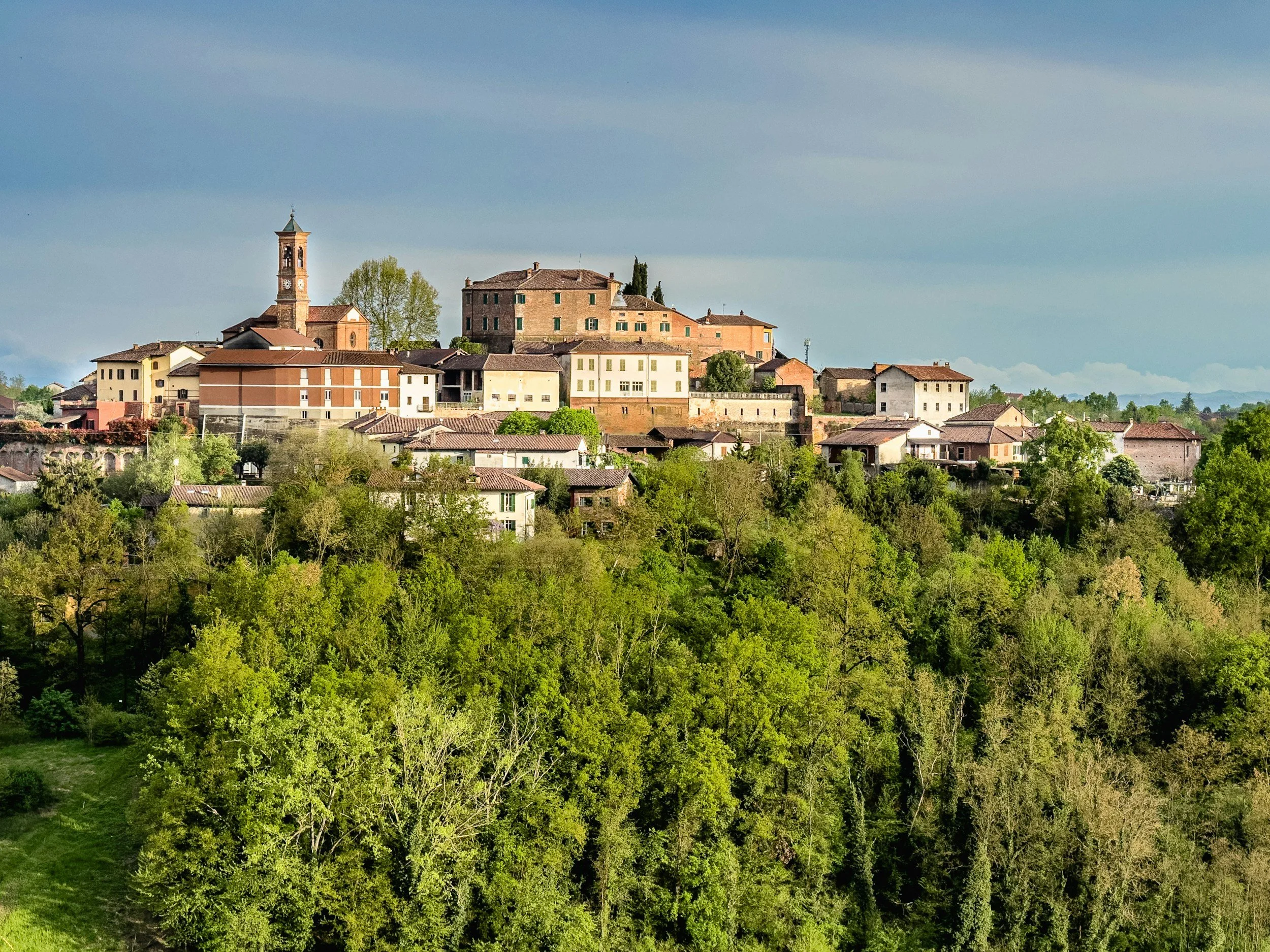
Piemonte — The Barolo Belt
Nestled against the Alps in Italy's northwest, Piemonte is home to Nebbiolo — one of the world's most cerebral and age-worthy red grapes. Barolo and Barbaresco are its finest expressions: powerful, structured, perfumed with tar and roses, capable of lasting decades in the right cellar.
But Piemonte is more than Nebbiolo. Barbera and Dolcetto provide the everyday drinking that locals actually pour at lunch. Cortese makes Gavi — one of Italy's finest crisp whites. And Moscato d'Asti, softly sparkling and gently sweet, is one of the world's most underrated pleasures.
Veneto — From Soave to Amarone
The Veneto is Italy's most prolific wine region by volume — but volume is not the whole story. At its best, the Veneto produces wines of extraordinary depth: Amarone della Valpolicella is one of Italy's most distinctive reds, made from partially dried grapes and capable of profound complexity.
Soave, made from Garganega, can be genuinely lovely in its classico zone — mineral, almond-edged, and food-friendly. Pinot Grigio from the northeast (Alto Adige especially) is a world away from the bland supermarket version: textured, aromatic, and worth seeking out.
Central Italy
Tuscany — The Heart of It All
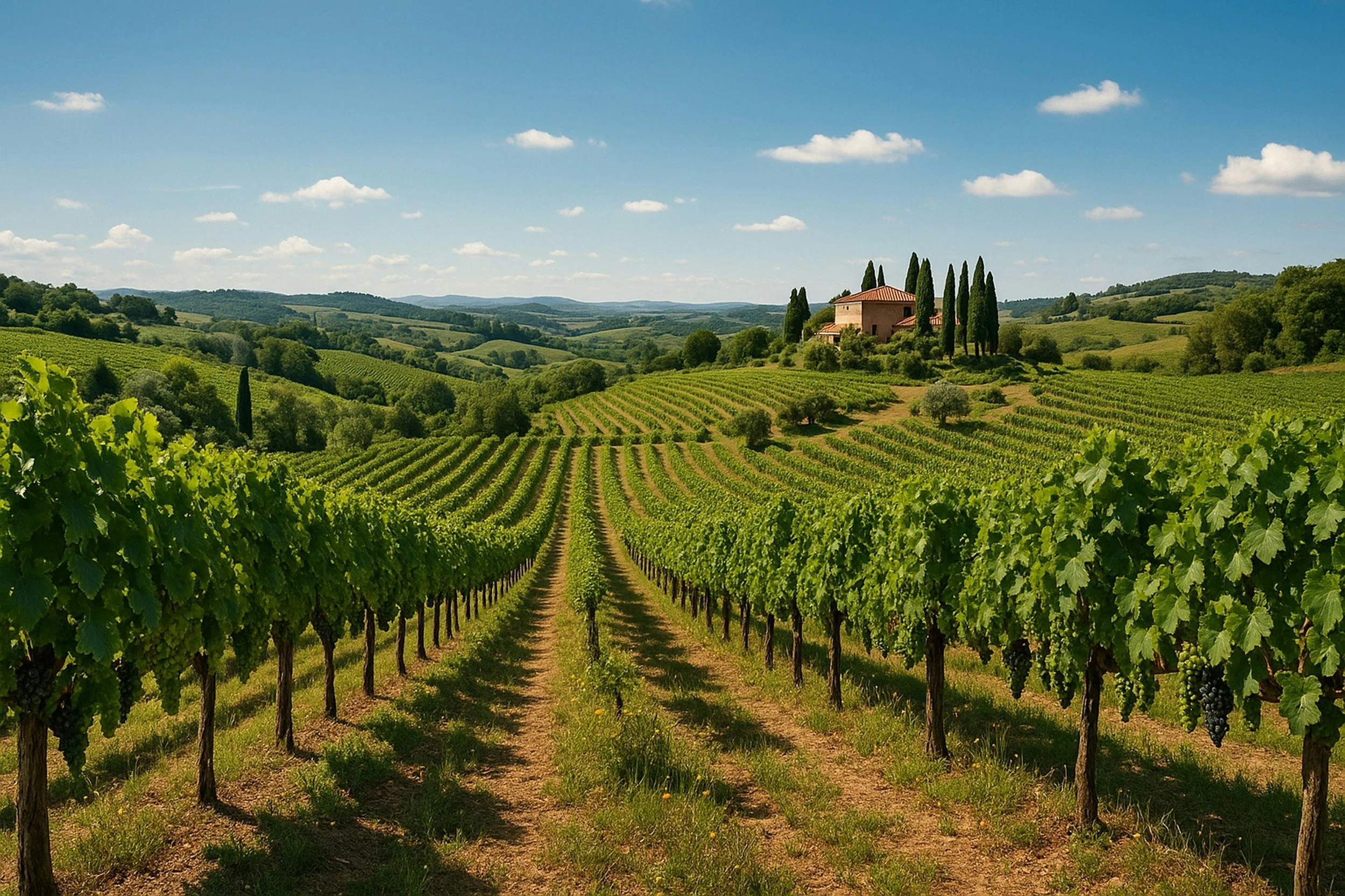
If there’s one Italian region that captures the imagination of travellers and wine lovers equally, it’s Tuscany. The cypress-lined roads, the hilltop towns, the golden light in September — and at the centre of all of it, Sangiovese.
Sangiovese is Tuscany's soul grape. In Chianti Classico, it is bright and food-friendly. In Brunello di Montalcino, it becomes something majestic — one of Italy's longest-lived reds. In Montepulciano (Vino Nobile), it takes on a silkier, more elegant character. And in the Super Tuscans — blends that broke the rules in the 1970s and 1980s by incorporating Cabernet Sauvignon — it made Italy's wine world sit up and pay attention.
Umbria, Marche & Beyond
Umbria — Tuscany's quieter inland neighbour — produces Sagrantino di Montefalco (intense, tannic, deeply local) and the more accessible Orvieto whites from Grechetto and Trebbiano. Marche gives us Verdicchio — one of Italy's most underrated whites: saline, textured, and genuinely food-versatile.
Southern Italy & The Islands
Campania, Puglia, Sicily
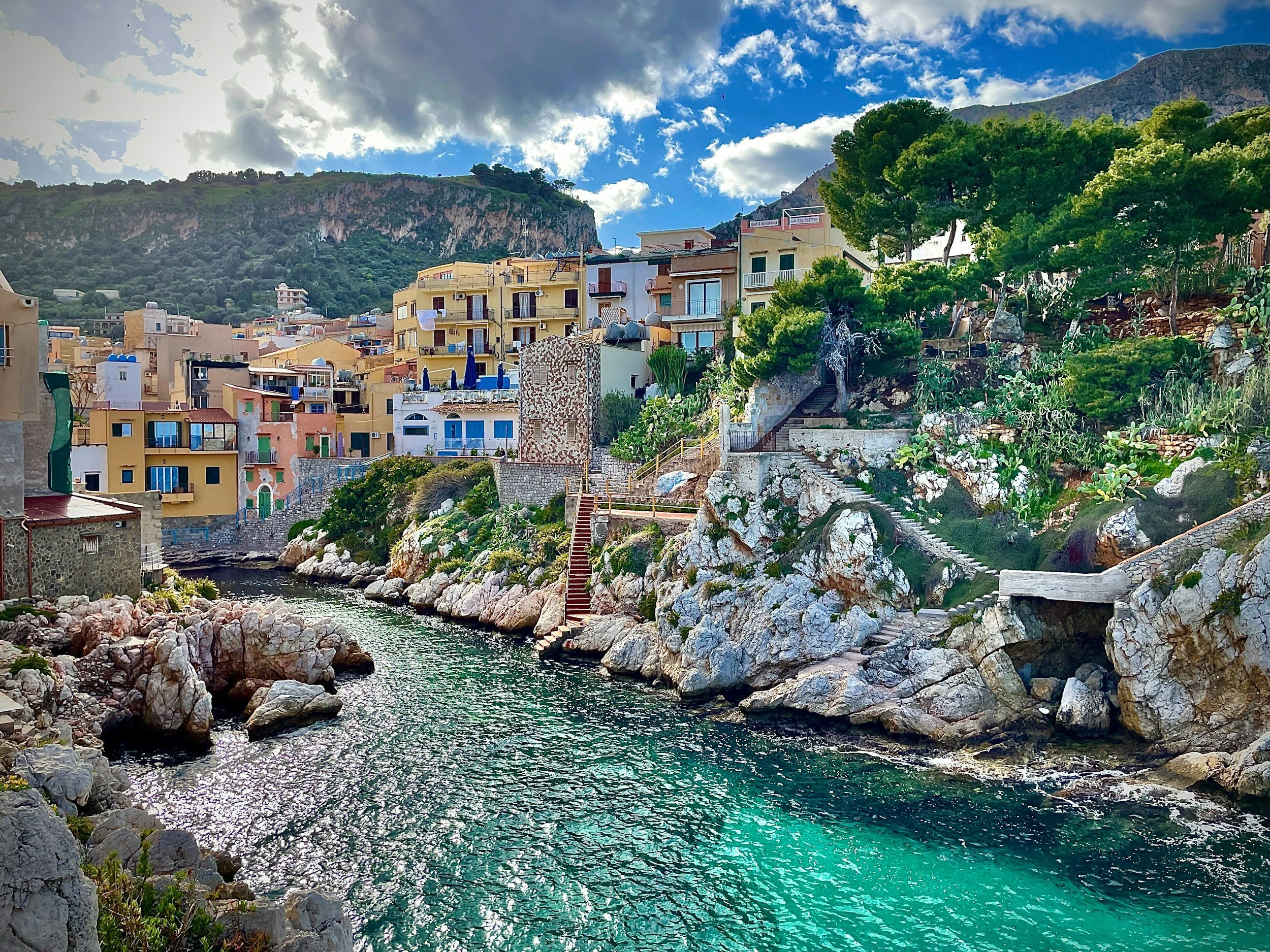
The south is Italy's most exciting frontier for wine discovery. Campania's volcanic soils (Aglianico, Greco, Fiano) produce wines of genuine character. Puglia's Negroamaro and Primitivo offer sun-drenched richness at remarkable value. Sicily — with Nero d'Avola and the women-led revolution at estates like Arianna Occhipinti's — has become one of Italy's most dynamic wine regions.
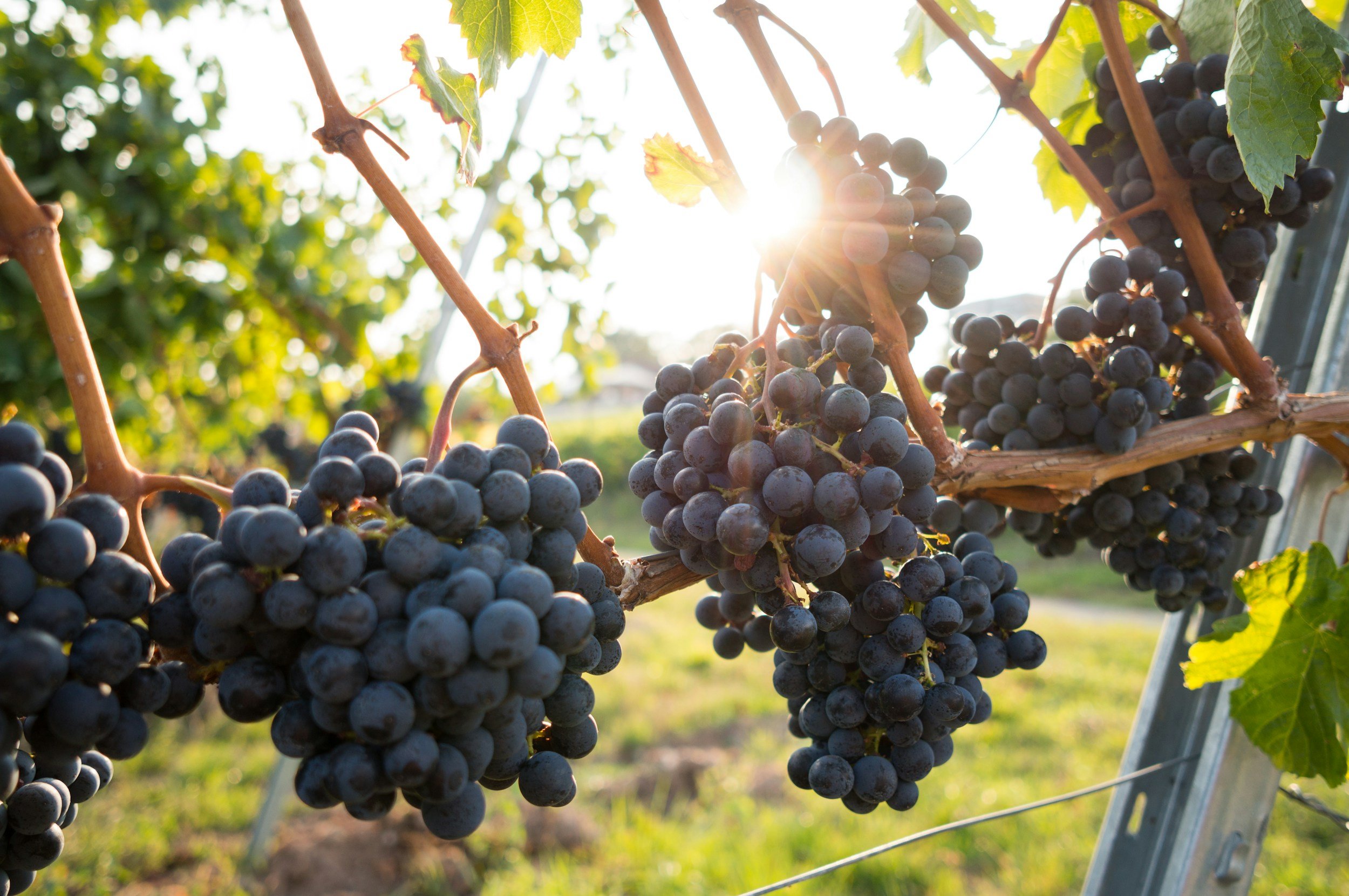
What Grapes Should I Know Before Visiting Italy's Wine Country?
You don't need to know all 350+ authorized Italian grape varieties — just the handful that define each region you're visiting. Below is the essential shortlist by region.
| Region | Key Grapes | What to Know |
|---|---|---|
| Piemonte | Nebbiolo, Barbera, Dolcetto, Cortese | Nebbiolo = Barolo & Barbaresco. Barbera = everyday red. Cortese = Gavi white. |
| Veneto | Garganega, Pinot Grigio, Corvina, Merlot | Garganega = Soave. Corvina = Valpolicella & Amarone. Pinot Grigio best from Alto Adige. |
| Tuscany | Sangiovese, Cabernet Sauvignon | Sangiovese is the soul of Chianti, Brunello, Vino Nobile. Cab Sauv in Super Tuscans. |
| Marche | Verdicchio | Underrated white — saline, textured, excellent with seafood. |
| Umbria | Grechetto, Trebbiano, Sagrantino | Sagrantino is rare, tannic, worth seeking out in Montefalco. |
| Campania | Aglianico, Greco, Fiano | Aglianico = the 'Barolo of the south.' Greco & Fiano = complex whites. |
| Sicily | Nero d'Avola, Chardonnay, Syrah | Nero d'Avola at its best is rich and structured. Occhipinti's work with Frappato is essential tasting. |
| Puglia | Negroamaro, Primitivo | Primitivo is genetically identical to Zinfandel. Both grapes produce bold, warm reds. |
| Basilicata | Aglianico | Aglianico del Vulture — volcanic, serious, rare. |
Where to Stay in Italy
Italy offers a range of accommodations that connect directly to the wine experience — from working estates with rooms to hotels positioned in the heart of wine country. Every category below can be booked directly or fully arranged for you.
The Agriturismo
Italy's agriturismo system — working farms and estates that offer accommodation and meals — is one of the world's great travel formats. Staying on a wine estate puts you in the rhythm of the place in a way no hotel can replicate. You wake up in the vineyard. You eat what grows there. You meet the people who make the wine.
Agriturismo San Sano (Chianti, Tuscany): an estate with accommodation and one of the most celebrated producers in the region
Piemonte: the Langhe hills around La Morra, Barolo, and Barbaresco have excellent agriturismo options.
Boutique Hotels in Italy’s Wine Country
For guests who want the wine country setting with more privacy and service, boutique hotels in or near the key wine towns offer the best of both worlds.
Montalcino (Tuscany): a hilltop town surrounded by Brunello vineyards — stay here and walk to estates
Asolo or Soave (Veneto): quieter bases for exploring the northeast
Noto or Ragusa (Sicily): for southern Italy — both beautiful towns with access to Nero d'Avola country
Prefer it fully arranged?
As a travel advisor, I can arrange preferred rates and amenities at properties across Italy — including estate stays that aren't bookable through standard channels.
→ Start Planning With MeWinery & Vineyard Recommendations
These are estates worth visiting for the experience as much as the wine — not just tasting rooms, but places where you can understand how the wine is made and who made it.
Book Before You Go: Unlike many U.S. wine regions, walk-in tastings aren't the norm in Italy — especially at the smaller, family-run estates on this list. Email or call ahead, ideally a few days to a few weeks in advance, and ask about visit and tasting fees.
Short on time? Start at an enoteca. If you're working with a tight schedule or don't want to plan transportation between scattered estates, a good enoteca (wine bar/shop) in a town like Montalcino, Barolo, or Florence lets you taste multiple producers side by side in one sitting — no advance booking, no driving. It's the best way to sample broadly before deciding which single estate is worth the drive out.
Women-Led & Women-Founded Estates
One of the most exciting developments in Italian wine over the past two decades has been the rise of women winemakers and producers — particularly in the south. These are the estates I prioritise when building Women & Wine itineraries.
Arianna Occhipinti (Sicily): One of Italy's most important natural wine producers. Her Frappato is luminous — light, fragrant, and completely distinctive. A visit to her estate near Vittoria is essential.
Cantina Marilina / Marilina Paternò (Sicily): Women-founded estate producing elegant Sicilian whites and reds.
Elena Pantaleoni / La Stoppa (Emilia-Romagna): One of Italy's great natural wine estates. Heroine of Italian wine for decades.
Donatella Cinelli Colombini / Casato Prime Donne (Tuscany, Montalcino): The first Brunello estate run entirely by women. Pioneering and important — both for the wine and the story.
Tuscany — Essential Visits
Fattoria Le Pupille (Maremma): One of the most acclaimed estates in southern Tuscany. Hospitable, beautiful, and producing wines of real depth.
Tolaini (Chianti): Modern estate with excellent hospitality infrastructure. Group-friendly.
Tua Rita (Suvereto): Known for its Redigaffi — one of Italy's finest Merlot-based wines.
Piemonte & Sicily — Essential Visits
Barolo and Barbaresco (Piemonte): Seek out the smaller, family producers in La Morra, Serralunga, and Neive — they offer the most personal visits.
Occhipinti (Vittoria, Sicily): A must if you're on the island.
Planeta (multiple Sicilian estates): Large but quality-focused, with beautifully designed visitor centers.
Can I Ship Wine Home From Italy?
Yes, but you'll need a licensed shipper — not the post office. USPS cannot ship wine internationally from Italy, so if a winery or wine shop offers to ship your purchase, they're using a licensed courier (often FedEx or DHL) on your behalf. Most estates and enoteche that sell to travelers do this routinely and can quote you on the spot.
What it costs: Budget roughly €80–150 for a 6-bottle case shipped door-to-door to the U.S., with larger cases costing proportionally more. This covers protective packaging and the courier fee — customs duty is separate and paid on delivery.
What you'll owe on arrival: Travelers get a 1-liter duty-free allowance per person; beyond that, expect a roughly 10% customs duty on the wine's value plus a small federal excise tax per bottle. A few states also cap how much wine can enter without a license, so it's worth a quick check of your home state's alcohol import rules before you order a large case.
The DIY alternative: If you're only bringing home a bottle or two, a padded wine protector sleeve in checked luggage is the simplest option — just remember wine has to go in checked bags, not your carry-on, under standard liquid restrictions.
Rules and rates shift periodically, so always confirm current pricing and customs terms with your shipper or the winery directly before you commit to a large order.
Book a Tasting
- 🔗 Winery Tours — Tuscany: Chianti & Montalcino
- 🔗 Winery Tours — Piemonte: Barolo & Barbaresco
- 🔗 Winery Tours — Sicily: Etna & Vittoria
What’s The Best Time to Visit Italy, Season by Season
The quick answer: harvest season (September–October) is best. Here's the full picture for planning around your own schedule.
September – October: Harvest Season (The Best)
Harvest — vendemmia — transforms the countryside. The air smells of fermenting grapes. Estates open their doors. Restaurants change their menus. This is Italy at its most alive, and the most natural time to visit if wine is the reason for the trip.
Tuscany: late September into October for Sangiovese
Piemonte: October for Nebbiolo — often harvested last, after fog settles in the Langhe hills
Veneto: September for Soave whites; Amarone grapes begin drying in September, finish months later
May – June: Spring (Underrated)
Before the summer crowds arrive, Italy is green and open. Wineries are less busy, estates are more accessible, and the weather is ideal for long lunches outdoors. This is a wonderful time for a smaller, more private experience.
November – March: Winter (For the Serious)
Truffle season (October–December in Piemonte and Tuscany). The estates are quiet. The hospitality is more personal. Worth considering for a more immersive, off-season experience — especially for guests who prefer depth over atmosphere.
July – August: Summer (Avoid if Possible)
Beautiful, but hot and crowded — especially in Tuscany. If summer is the only option, head south to Sicily or the coast, or plan around early-morning vineyard visits before the heat sets in.
What Wine Pairs with Italian Food, Region by Region?
The rule that works almost without exception: drink the wine of the region with the food of the region. A Barolo with Piemontese braised beef. A Soave with Veneto seafood. A Chianti Classico with a bistecca Fiorentina — the pairings are baked into the culture.
| Region | Wine | Food Pairing |
|---|---|---|
| Piemonte | Nebbiolo (Barolo / Barbaresco) | Braised meats, truffles, aged cheeses |
| Barbera | Pasta al ragù | |
| Moscato d'Asti | Fresh pastry or on its own | |
| Veneto | Soave | Light seafood and risotto |
| Valpolicella | Pasta dishes and pizza | |
| Amarone | Aged hard cheeses, game, or rich braises | |
| Tuscany | Chianti Classico | Tomato-based pasta, grilled meats, Pecorino |
| Brunello | Fine Florentine beef or wild boar | |
| Super Tuscans | Lamb or duck | |
| Sicily | Nero d'Avola | Grilled fish, caponata, or slow-cooked lamb |
| Whites (Grillo, Catarratto) | The island's seafood | |
| Campania | Greco di Tufo & Fiano | Seafood and white-sauced pasta |
| Taurasi (Aglianico) | Wood-roasted meats |
Ready to plan your Italy trip?
I curate the estates, the stays, and the itinerary — every detail, built around what you actually want from the trip. Reach out and let's build it.
→ Let's Build Your Trip